
¿Qué es Borojó?
Ficha técnica
Familia: Rubiaceae
Nombres comúnes: Borojó.
Nombre científico:
Borojoa patinoi Cuatrec.;
Borojoa sorbilis Cuatrec.
Ambas especies son muy parecidas, variando en los tipos de suelo donde crecen.
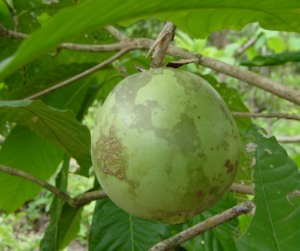
El Borojo es una fruta, altamente energética, y nutritiva.
Se utiliza comúnmente en Colombia desde hace mucho tiempo, y se esta dando a conocer en otros países, principalmente por sus supuestas propiedades afrodisíacas, aunque esta característica es una de muchas que presenta el Borojo.
Origen y distribución geográfica del Borojo
El borojo se asume como originario de las Amazonas, ya que allí se encuentra la mayor cantidad de especies reportadas. En el amazona brasilero existen cinco especies de borojo; en el Darién panameño encontramos dos especies, el borojo panamensis y el borojo atlantisensis, o como lo llaman los indígenas emberá: borojo pichí, que significa que es pequeño. Las especies típicas del género son entonces el borojo patinoi cuatrecasas, que se encuentra en Colombia. Igualmente el borojo sorbilis de la amazonía brasilera.
Estatus e importancia económica del Borojó
El Borojo se encuentra de forma silvestre y cultivado comercialmente. Entre 1948 y 1951 se hace el descubrimiento de la especie desde el punto de vista botánico y taxonómico, por el Doctor Víctor Manuel Patiño, quien recoge las especie en el Chocó y la lleva donde el botánico taxónomo, el Doctor José Cuatrecasas, un profesor de taxonomía de la Universidad de Colombia, sacerdote jesuita, quien es el que lo clasifica, y en respeto al Dr. Patiño lo denomina Borojoa patinoi. Pero Doctor José Cuatrecasas descubre que no solo la especie es nueva para la ciencia, sino también el género.
En 1953 en Brasil reclasifica la especie. El género borojo tiene la característica de que el tejido placentario no tiene divisiones ni tejido ninguno, es connivente y convergente. Esa característica hace de que ese genero sea especifico. El género es ahora aceptado universalmente.
Descripción
La fruta de Borojo tiene 7-12 centímetros de diámetro, es de color verde y cambia a chocolate cuando madura; la pulpa es de color chocolate, ácida, y densa (30º Brix, consistiendo principalmente de fructosa y glucosa de alto contenido proteínico). Posee un número variable de semillas entre 90 a 600 por fruta. Se considera maduro cuando cae al suelo, y la forma de recolección es manual. Son frutas que alcanzan hasta las cuatro libras de peso.
El árbol de Borojo alcanza una altura de 3-6 metros y es muy antiguo, de especie dioica (más atrasada que las hermafroditas, en términos evolutivos de las especies). Dioica quiere decir que la flor femenina está en un árbol y la flor masculina en otro. La mayoría de las especies de este tipo han desparecido. El borojo ha podido llegar hasta nuestros días solamente porque el hombre se introdujo en el proceso de conservarla; y si la conservó fue porque logró tener algún significado muy especial para él.
Los indígenas de las selvas del Darien, en Panamá, utilizan el Borojo como alimento y medicina. El Borojo es un energético natural y les ayuda a realizar caminatas bajo alta temperatura sin alimento, subir montes, recorrer selvas y llegar al límite de su fortaleza. Los indígenas del lugar acostumbran dejar en un recipiente con agua los frutos de Borojo que se caen de maduros. Esta agua convertida en jugo les proporciona una gran fuente de energía.
La fruta no produce efectos secundarios conocidos ni dependencias, aunque puede subir momentaneamente la presión sanguínea.
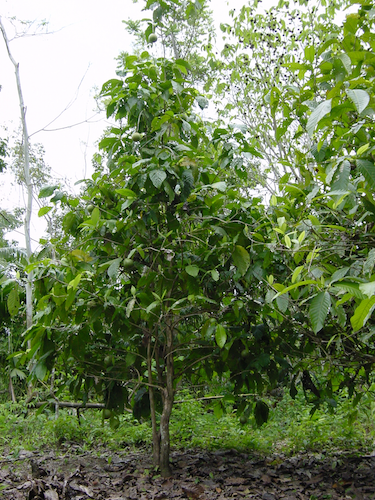
Algunos requisitos para el Cultivo de Borojo
Temperatura: Media de 28°C
Humedad relativa: De conformidad con su origen , tolera humedades relativas del 80% hasta el 100%.
Luminosidad: Se desarrolla normalmente en zonas de bajo brillo solar menor de 1500 horas- luz/año.
Precipitación: Áreas de alta lluviosidad, mayores de 4000 mm. por año.
Suelos: Crece normalmente en suelos ácidos, profundos y de baja fertilidad natural, como corresponde a los suelos desarrollados bajo condiciones de muy alta precipitación; prefiere suelos bien drenados.


